
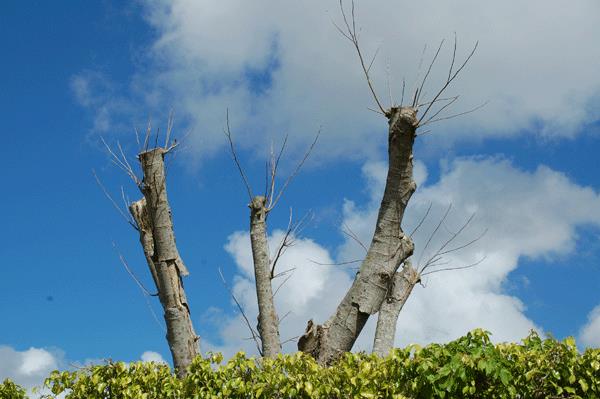
Recently, we sold our home in Phoenix, Arizona. Part of this process involves getting a home inspection. Our inspection came back showing termite damage. The inspector included pictures of the damage and recommended a several hundred dollar treatment to kill the termites and to prevent future infestations. Fortunately, I knew this damage to be water damage. We ordered a second inspection, which came back showing no termites.
I don’t think that there was malicious intent on the part of the first inspector. People make mistakes. However, this was a great example of how being informed and getting a second opinion when something doesn’t seem right can save you quite a bit of unnecessary expense.
The same can be very true when working with a tree service company. Your risk of getting taken advantage of or being the victim of human error can be greatly mitigated by taking a few steps to make sure you are making the right decision regarding tree pruning, removal, diagnosis or treatment.
1. Hire a reputable company or arborist that you trust.
Take the time to research the tree service companies or arborists that you are getting quotes from. Make sure that the company you are hiring has the proper insurance (liability and workers compensation) to perform tree pruning and removal. If they will be applying insecticides, herbicides or fungicides, make sure they are licensed to do so. Any reputable company should be able to provide you with the documentation required to perform these services. Verify any claimed credentials. The most commonly used credential is “ISA Certified Arborist”. Luckily, this can be easily checked here:
2. Check the reviews.
Online review sites, such as Yelp! and Angie’s List can helpful, but shouldn’t be the only piece of information on which you base your decision. Whether it be to a companies advantage or detriment, online reviews don’t always paint the whole picture. Obviously, recommendations from friends and neighbors are always a plus.
3. Ask lots of questions.
Once you have selected a company to work with, you can give yourself further peace of mind by making sure that you are well informed about any recommended services or diagnoses. A good arborist will take the time to make sure that you are completely comfortable before asking you to pay for their services. One of the best parts of my job is educating people about their trees. If pruning is being done, make sure you understand what is going to be pruned and why. You only get one chance to properly prune a tree. Improper pruning can cause permanent damage.
4. Do your own research.
Lastly, it never hurts to do some basic research to verify the information you are given. I am not an advocate for doing a diagnosis or assessment yourself that is better left to a professional. (Like many others, I have made the mistake of going on a medical website and convincing myself that I had some deadly ailment, only to be told be a doctor that I was fine.) However, there are some companies out there that, whether intentionally or not, will give you false information. For example:
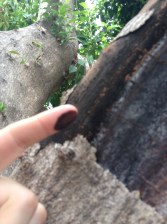 This client was told that her tree had sooty canker (correct) and was sold a $180 soil injection treatment to “cure” the sooty canker (absolutely false). A quick google search would have instantly told the client that sooty canker is not a treatable fungal infection. Pruning out the infected limbs can work early on, but in the case of this tree, would have been a waste of money. Luckily, this client got a second opinion and we were able to inform them of their options. The $180 treatment would have been money down the drain.
Cases like this, where a client is purposefully mislead by an arborist are not common, especially if you have already done steps 1-3 on this list. However, it is always a good idea to approach any major expense or decision with a bit of healthy skepticism. A good arborist would be glad to share references or information with you that supports his or her conclusions.
The tree care industry is full of highly professional, passionate people who take their jobs seriously. It is the duty of every legitimate arborist and homeowner to hold tree care service companies accountable to the highest standards. This means supporting the companies with a track record of honesty and quality work and making it known when you come across a company that is willing to mislead its clients for a quick buck. Hopefully, you find the steps in this article useful and you will have peace of mind the next time you hire someone to work on your trees.
Upcoming article: EAB Series #2: How to Identify Ash Trees
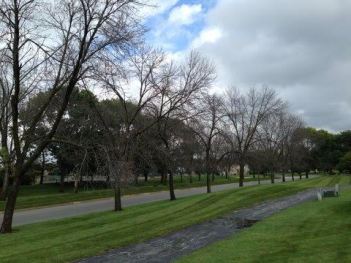 pulations of many cities. This pest has been found in St. Louis and, if you have an Ash tree, you WILL be impacted. You may remember the
  sebastian the arborist