Continue reading “Why are all of these bugs bugging my trees?”
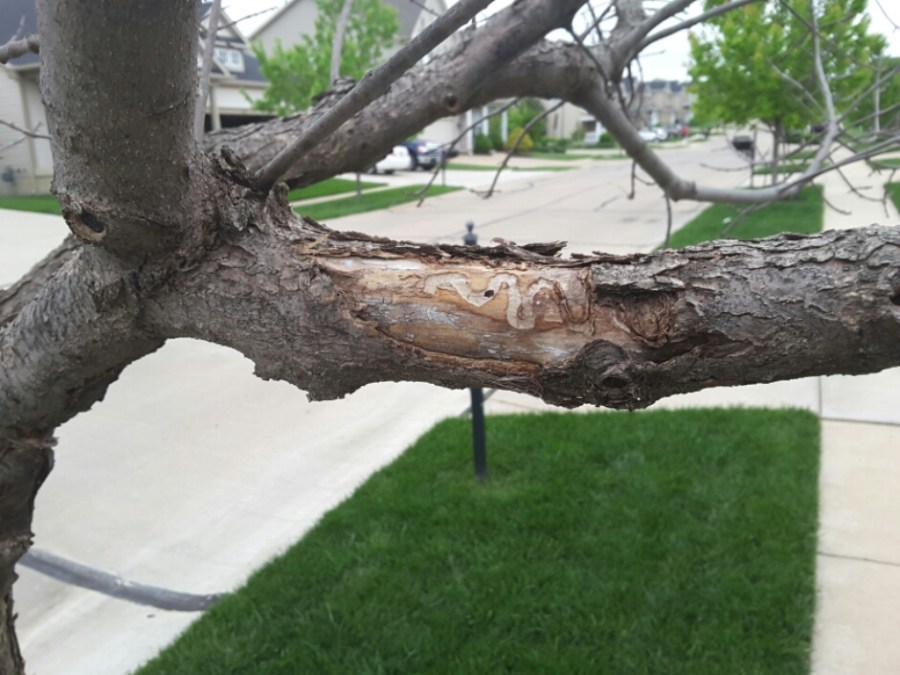
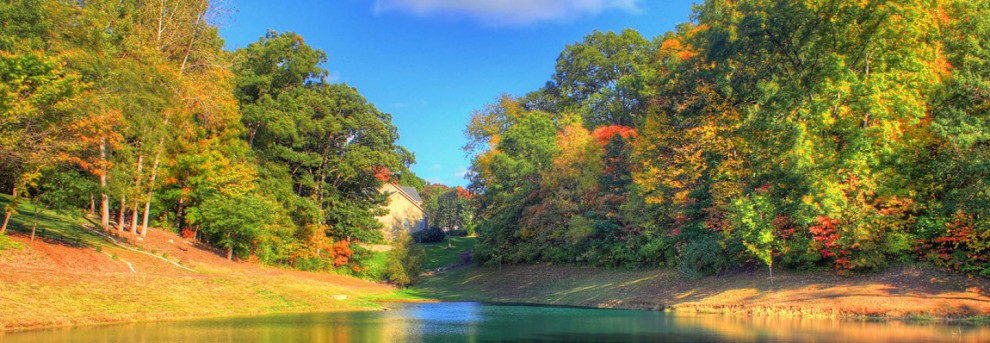
If Emerald Ash Borer has been confirmed in your area, as is the case with St. Louis and St. Charles Counties, your first step is to decide whether or not your tree is worth treating to prevent infestation. I will put together a post on what goes into this decision in the near future. Today, let’s assume that you have determined (with expert advice, I hope) that your tree is too valuable to you to remove and you would like to have it treated. Here are 5 important facts to consider, regarding the treatment of Emerald Ash Borer:
Imidacloprid is the most common insecticide available to homeowners. It is typically applied as a soil drench. Be sure to read up on regulations that specify how much Imidacloprid can be applied over the course of the year. These treatments are an option for those who want to make a minimal financial investment. However, it should be noted that Ohio State University and Michigan State University trails have shown that Imidacloprid soil drenches give inconsistent results.
The most common treatment a professional will use is emamectin benzoate (TREE-äge™). This treatment is performed by trunk injections, starting in May or June. Studies in both Michigan and Ohio have shown that even at a low application rate, injections of emamectin benzoate have proven to be greater than 99% effective.
A single emamectin benzoate treatment provides consistent protection from EAB for a period of 2 years. Removal costs, particularly in larger trees, are typically much higher than treatment costs. This does not take into account the benefits of keeping a healthy Ash tree with several years of useful life (property value, shade, erosion control, etc.)
Waiting until your tree is infested is not a great option for most homeowners. A proactive approach is vital, especially if EAB has been identified within 15 miles of your home. Emerald Ash Borer can be present in a tree long before symptoms begin to appear. Oftentimes, when a homeowner notices that there is a problem, it is too late.
Emerald Ash Borer is here. It is everyone’s job to try to prevent it’s spread. The USDA has placed a quarantine on infested areas and there are fines in place to prevent potentially infested ash trees, logs or hardwood firewood from moving out of areas where EAB occurs. Visit http://www.emeraldashborer.info/ for more information.
That’s all, for now! Thank you for stopping by.
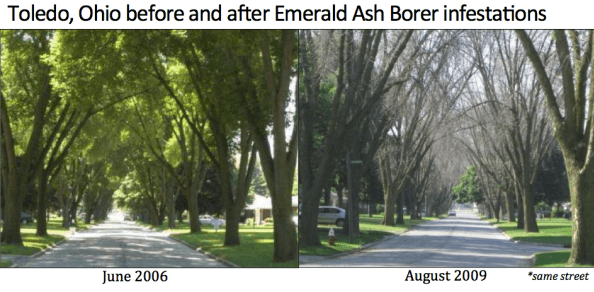
Don’t let this be your neighborhood:
I took a trip to KAT Nurseries today to take a look at the latest delivery of trees. Many trees have started to show their flowers; Red and Silver Maple, Elm and Cornelian Cherry Dogwood. One plant, however, has had its blooms for a good part of winter…
Allow me to introduce The Ozark Witch Hazel.
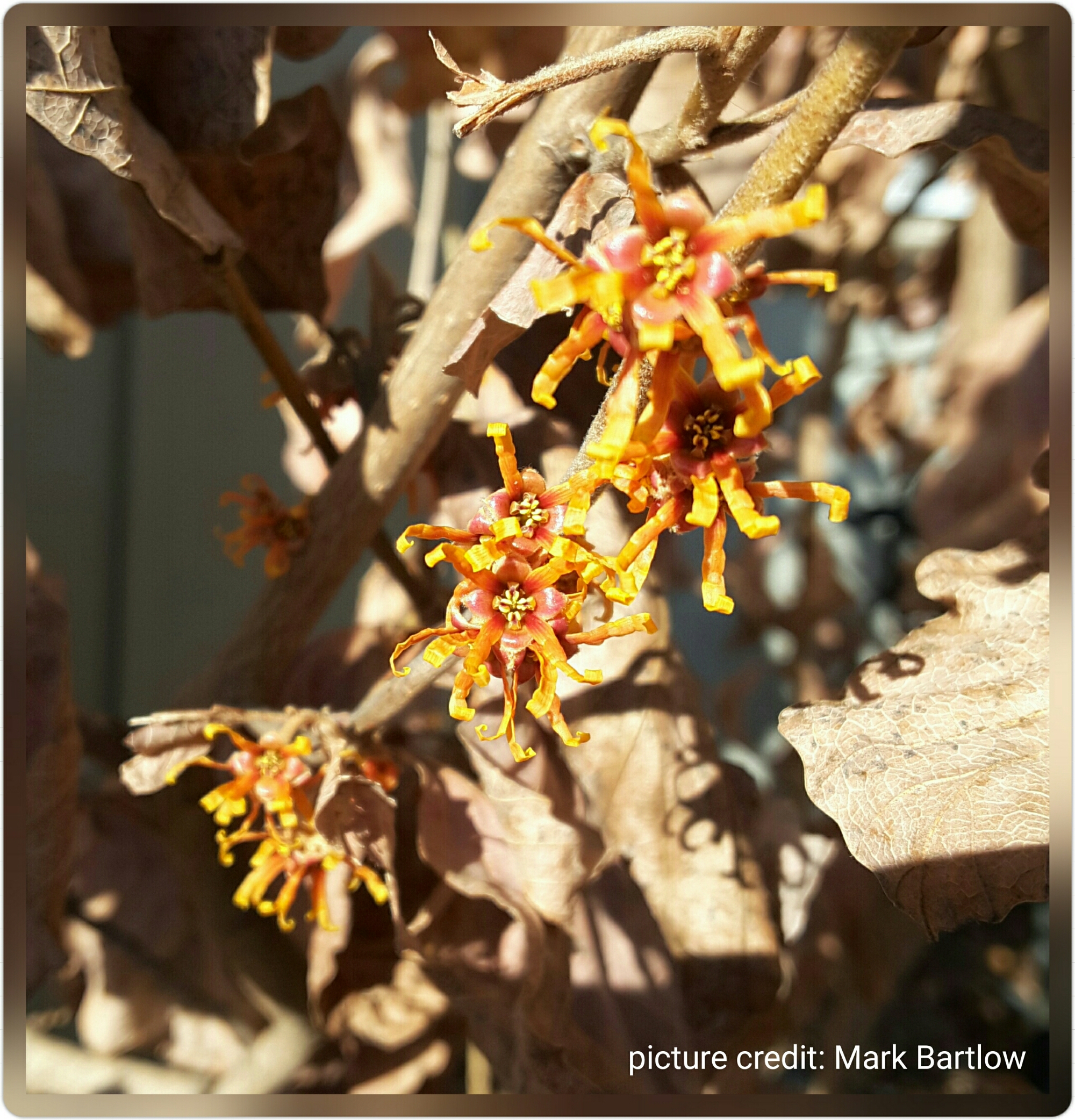
Ozark Witch Hazel, Hamamelis vernalis, is a deciduous small tree/large shrub that can grow to approximately 10′ tall. It’s valued because of its flowers, which are often present when no other plants in the landscape are blooming. While not overly showy, the 4-petaled flowers are very fragrant. They come in a variety of colors, including red, yellow, orange and pink. This native plant is the perfect companion to carry us through the last few weeks of winter and offers a great preview of the colors and scents we associate with spring.
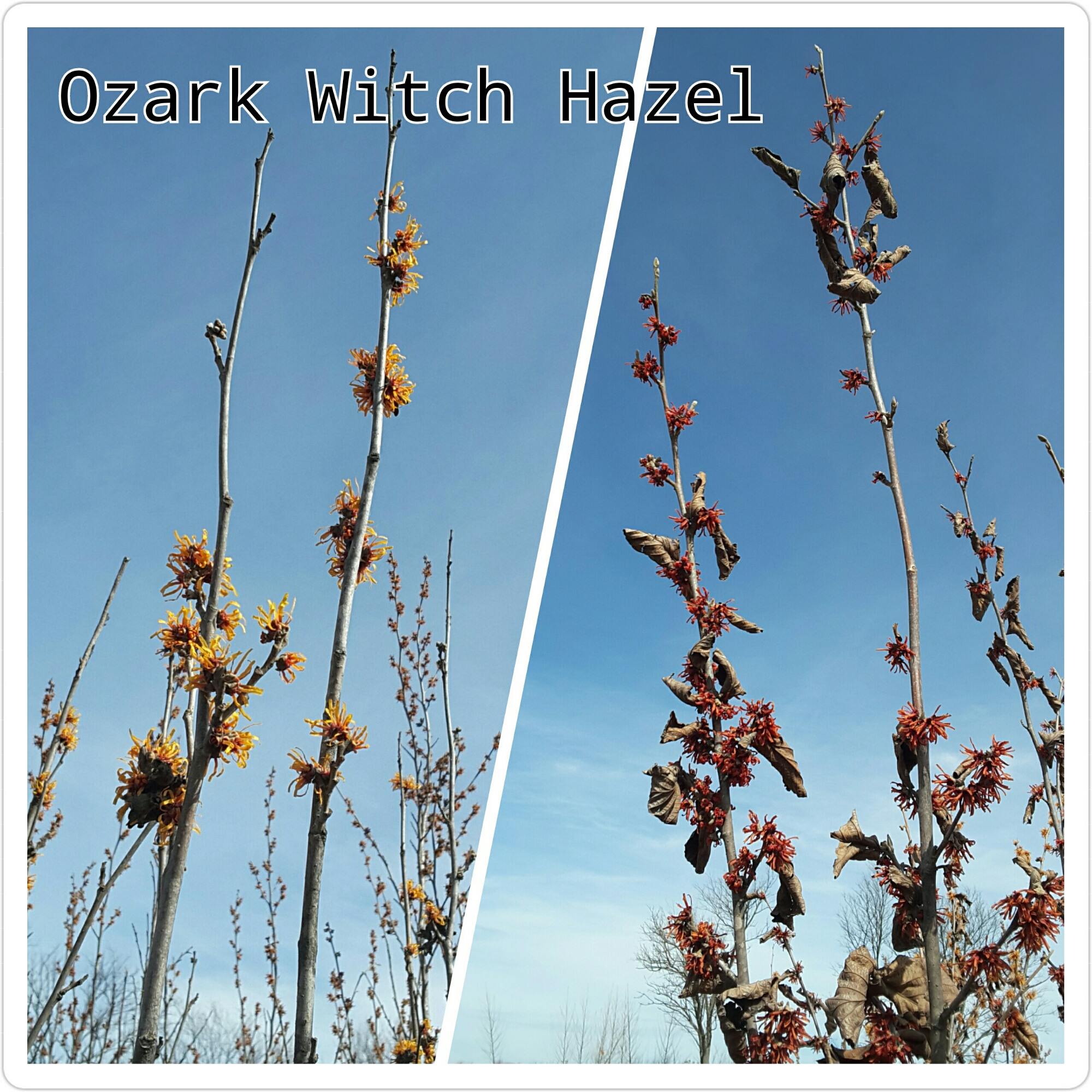
A few pointers for those of you who may want to add this plant to your landscape.
With Emerald Ash Borer looming, every homeowner in the St. Louis area has some fact gathering to do.
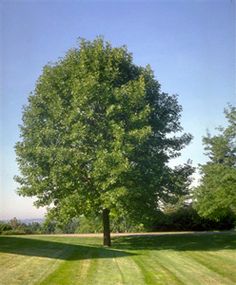
As promised, today I am going to help you determine whether or not you have an Ash tree on your property. Luckily for us, the Emerald Ash Borer has decided to attack a tree that is very unique and easy to identify. Just remember two important features and you are well on your way: Opposite Branching and Compound Leaves.
Let’s start with opposite branching. In Ash trees, branches grow “opposite” each other. The buds on smaller branches and twigs will be directly opposite of each other, as well. Keep in mind that you will need to look throughout the canopy of the tree. Sometimes, the tree may lose a limb or bud on one side or the other, so not every branch will have its “mate”. I took the picture, below, at the Overland Park Arboretum. With the leaves missing, the opposite branching really stands out.
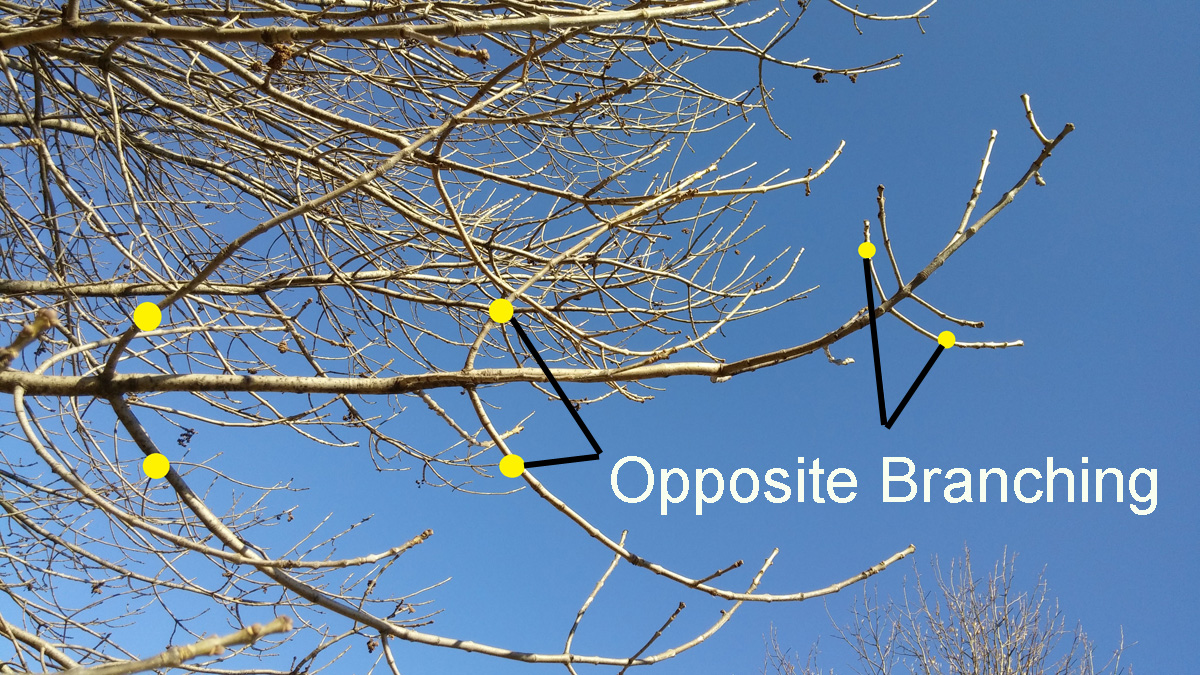
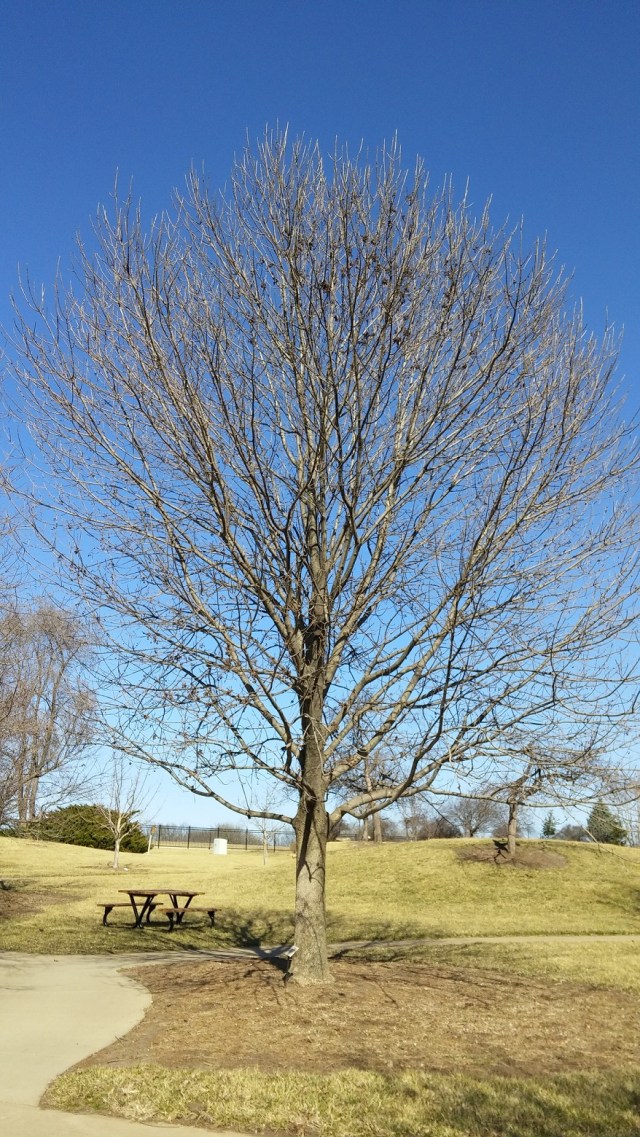
Once you have identified that your tree has opposite branching, you have narrowed it down to a handful of options. Maple, Ash, Dogwood and Horsechestnut (or Buckeye) are the only trees that have this feature. Looking at the leaves will help determine if your tree is an Ash or one of these other species of tree.
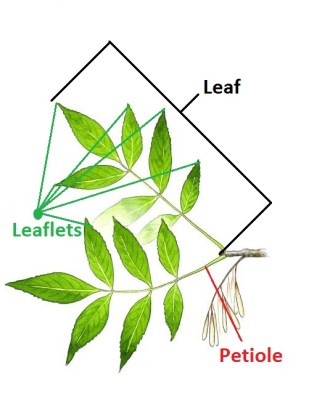 Ash have compound leaves. A compound leaf has multiple “leaflets” all coming from one stem base (petiole). Ash have between 5-9 leaflets per leaf.
If you look at the image to the left, you will see 2 leaves (notice how they are growing opposite each other). Each leaf has one petiole and 7 leaflets. The leaflets in this picture are finely serrated or toothed, but some Ash may have smooth leaves.
By now, you can be fairly certain whether you have an Ash tree. However, here are a couple more tell-tale signs.
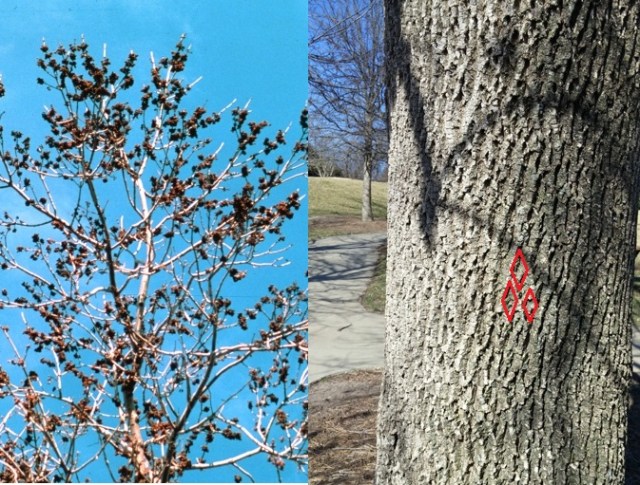
On the left, you can see an Ash with “Ash Flower Gall”. Ash flower galls are the brown or green clusters you see hanging from the branches on this tree. These galls are the tree’s reaction to a mite that feeds on the Ash’s flowers. The galls do not harm the tree and are a purely aesthetic issue. They are easy to spot, once all of the leaves fall off of the Ash.
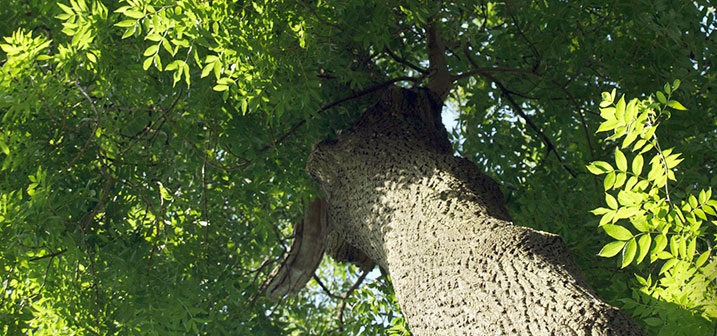
The right image shows the diamond-plate-like pattern on the bark of a more mature Ash tree. I wouldn’t use this as the primary identifier, but if you have a tree with opposite branching, but don’t know what type of leaves it has, this can be a good clue.
If you still aren’t certain, it never hurts to contact an arborist to identify a tree for you. We are glad to help!
If you have an Ash, it may be time to start considering how you plan to address the emergence of Emerald Ash Borer. This means you will need to take into account the health, location, value and expense of maintaining your tree. Consulting with an arborist is recommended to help you go over your options and to get an idea of the cost of treatment or removal.
Hope this helps! Until next time!
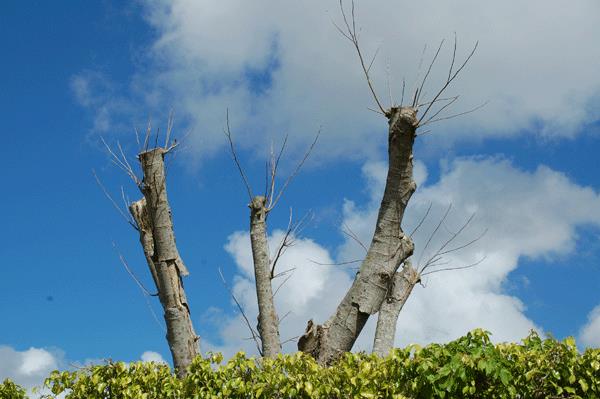
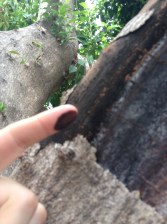 This client was told that her tree had sooty canker (correct) and was sold a $180 soil injection treatment to “cure” the sooty canker (absolutely false). A quick google search would have instantly told the client that sooty canker is not a treatable fungal infection. Pruning out the infected limbs can work early on, but in the case of this tree, would have been a waste of money. Luckily, this client got a second opinion and we were able to inform them of their options. The $180 treatment would have been money down the drain.
Emerald Ash Borer is a beetle from Eastern Asia that has made its way to the United States and has already devastated the Ash po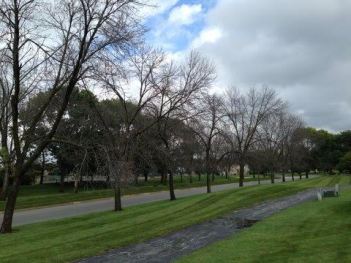 pulations of many cities. This pest has been found in St. Louis and, if you have an Ash tree, you WILL be impacted. You may remember the Ash trees being removed from the Arch Grounds a few years ago. Preventative treatments, early interventions and removal are the only options available to anyone who owns an Ash tree.
I am often asked: How serious is this problem? Emerald Ash Borer, once it has infested your tree, has a 99.9% kill rate when left untreated. Many people still remember Dutch Elm Disease and all of the Elm trees that succumbed to it. Dutch Elm Disease killed 200 million Elm trees in the United States. Emerald Ash Borer has the potential to kill 7.5 billion Ash trees. Imagine hundreds of dead Ash trees in your neighborhood and the cost involved in removing all of these trees.This is not a problem that anyone can afford to ignore.
In the upcoming days, stop by for more information on:
 sebastian the arborist