I took a trip to KAT Nurseries today to take a look at the latest delivery of trees. Many trees have started to show their flowers; Red and Silver Maple, Elm and Cornelian Cherry Dogwood. One plant, however, has had its blooms for a good part of winter…
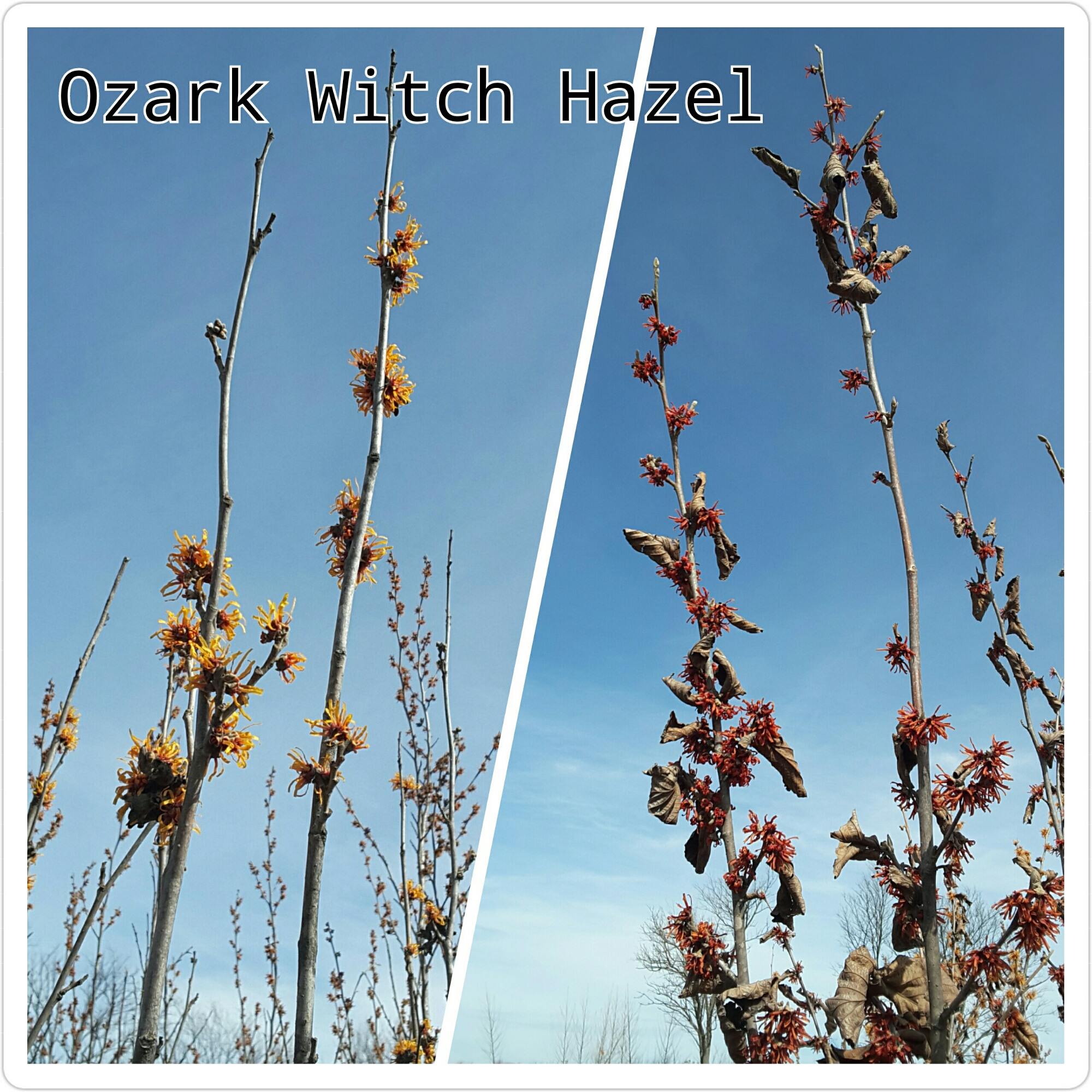
Allow me to introduce The Ozark Witch Hazel.
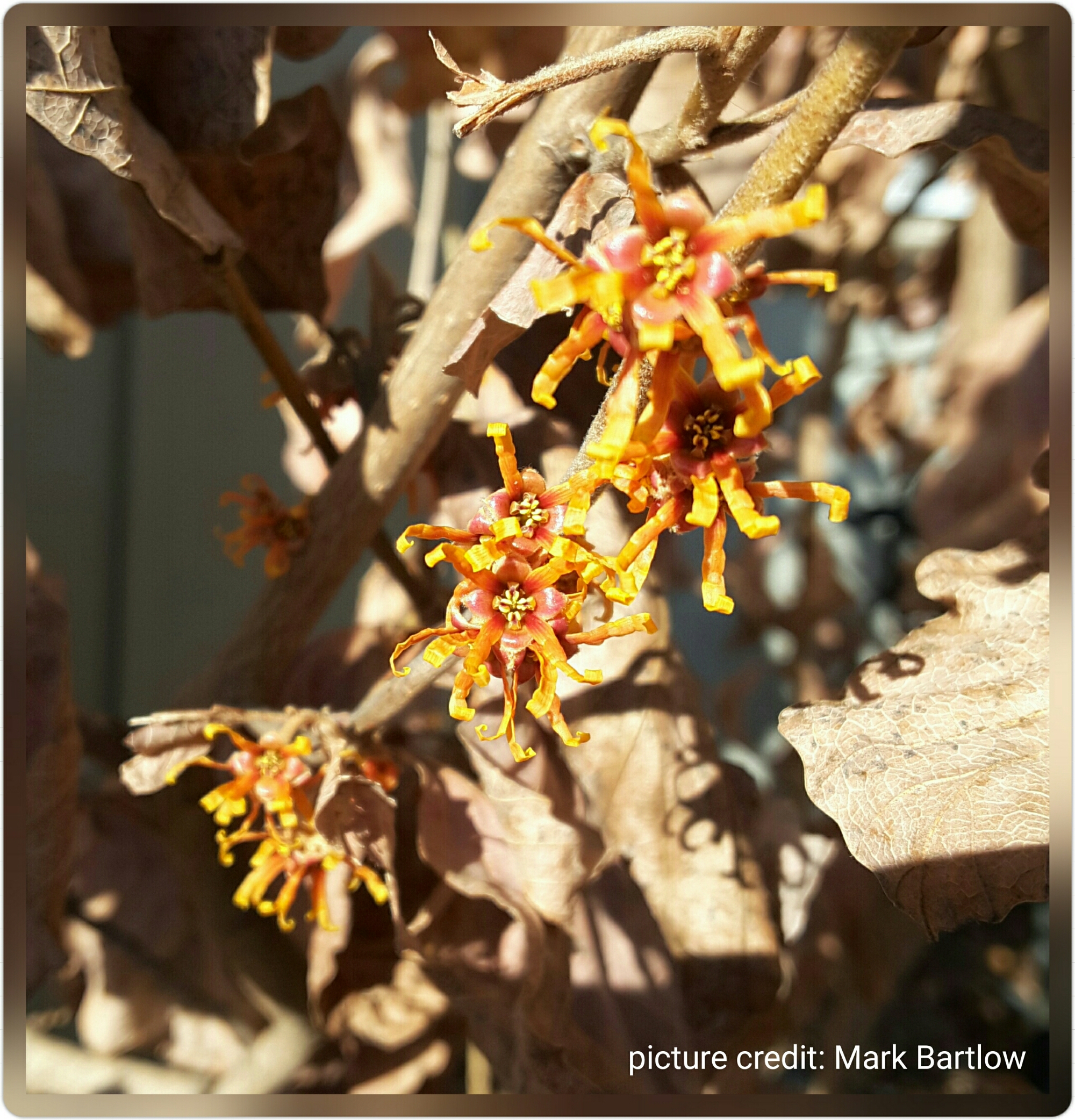
Ozark Witch Hazel, Hamamelis vernalis, is a deciduous small tree/large shrub that can grow to approximately 10′ tall. It’s valued because of its flowers, which are often present when no other plants in the landscape are blooming. While not overly showy, the 4-petaled flowers are very fragrant. They come in a variety of colors, including red, yellow, orange and pink. This native plant is the perfect companion to carry us through the last few weeks of winter and offers a great preview of the colors and scents we associate with spring.
A few pointers for those of you who may want to add this plant to your landscape.
Flowers January to March in St. Louis
Best blooms come in full sun, but will do well in partial shade.
Does best in moist, well-drained soil.
Prune in spring, once flowers are gone to control size.
Thank you to KAT Nursery for allowing us to tour the property today and for being a valued resource for Ryan Lawn and Tree.
With Emerald Ash Borer looming, every homeowner in the St. Louis area has some fact gathering to do.
Do you have an Ash?
Is the Ash worth keeping?
Has your Ash already been infested with EAB?
What are your options for treatment or removal?
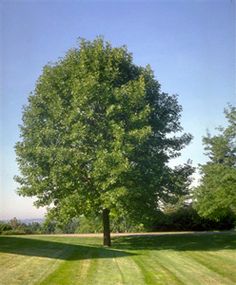
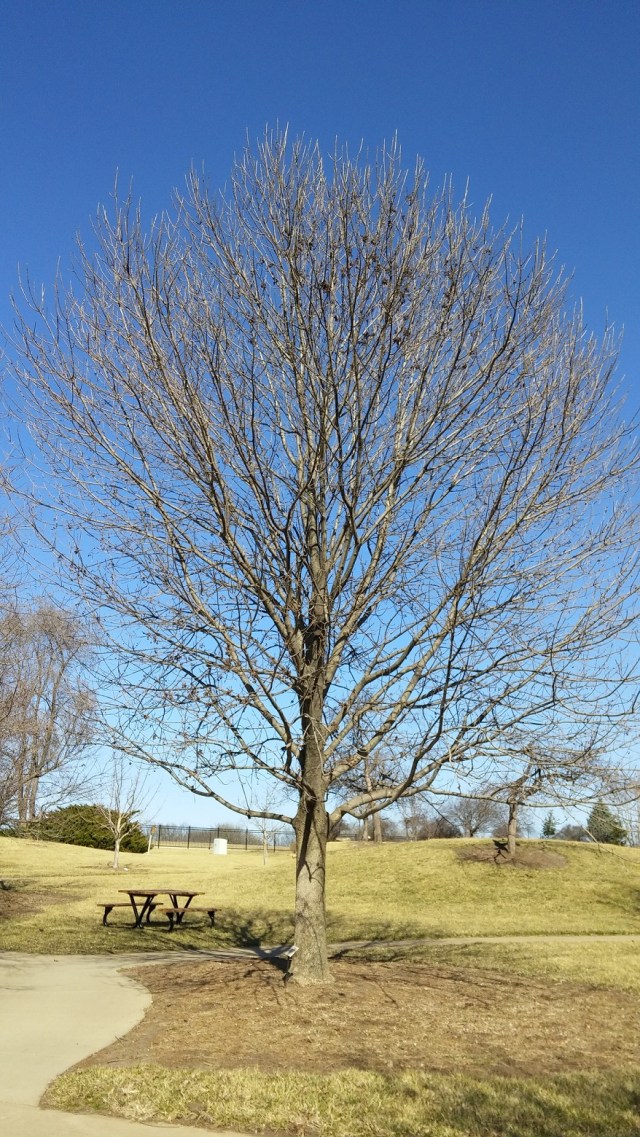
White Ash
Ash Identification
As promised, today I am going to help you determine whether or not you have an Ash tree on your property. Luckily for us, the Emerald Ash Borer has decided to attack a tree that is very unique and easy to identify. Just remember two important features and you are well on your way: Opposite Branching and Compound Leaves.
Opposite Branching
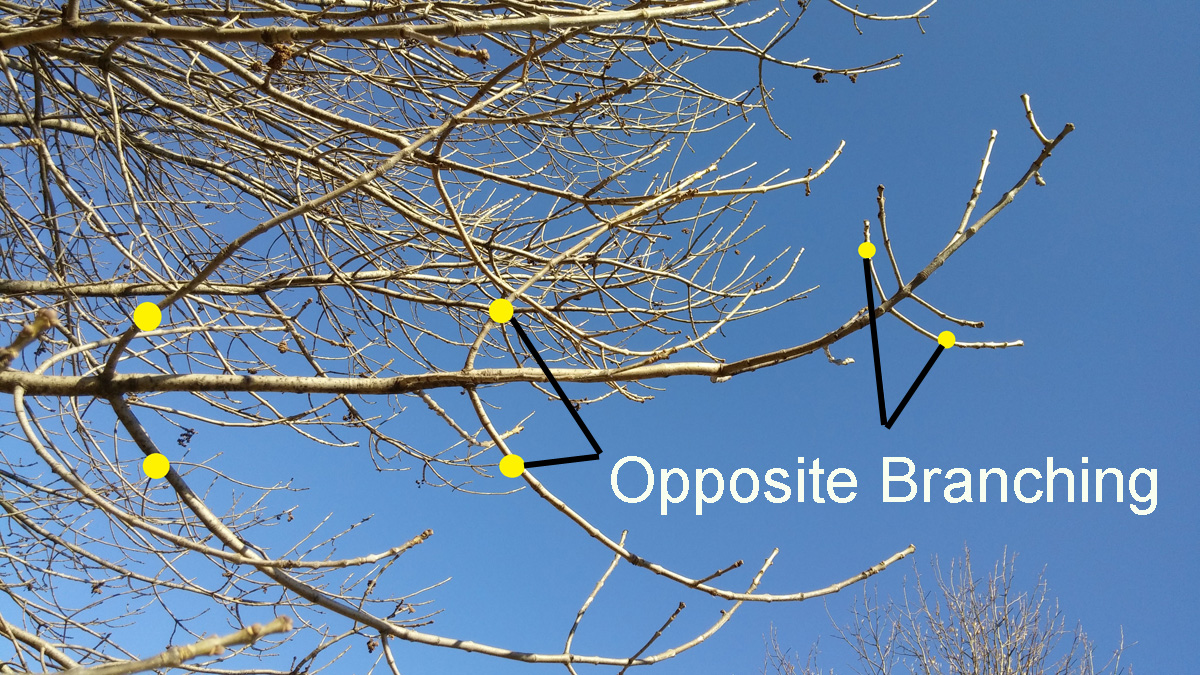
Let’s start with opposite branching. In Ash trees, branches grow “opposite” each other. The buds on smaller branches and twigs will be directly opposite of each other, as well. Keep in mind that you will need to look throughout the canopy of the tree. Sometimes, the tree may lose a limb or bud on one side or the other, so not every branch will have its “mate”. I took the picture, below, at the Overland Park Arboretum. With the leaves missing, the opposite branching really stands out.
Compound Leaves
Once you have identified that your tree has opposite branching, you have narrowed it down to a handful of options. Maple, Ash, Dogwood and Horsechestnut (or Buckeye) are the only trees that have this feature. Looking at the leaves will help determine if your tree is an Ash or one of these other species of tree.
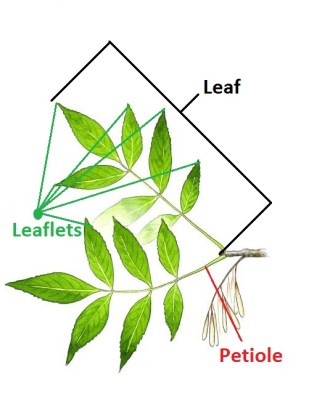
Ash have compound leaves. A compound leaf has multiple “leaflets” all coming from one stem base (petiole). Ash have between 5-9 leaflets per leaf.
If you look at the image to the left, you will see 2 leaves (notice how they are growing opposite each other). Each leaf has one petiole and 7 leaflets. The leaflets in this picture are finely serrated or toothed, but some Ash may have smooth leaves.
Other Identifying Characteristics
By now, you can be fairly certain whether you have an Ash tree. However, here are a couple more tell-tale signs.
On the left, you can see an Ash with “Ash Flower Gall”. Ash flower galls are the brown or green clusters you see hanging from the branches on this tree. These galls are the tree’s reaction to a mite that feeds on the Ash’s flowers. The galls do not harm the tree and are a purely aesthetic issue. They are easy to spot, once all of the leaves fall off of the Ash.
The right image shows the diamond-plate-like pattern on the bark of a more mature Ash tree. I wouldn’t use this as the primary identifier, but if you have a tree with opposite branching, but don’t know what type of leaves it has, this can be a good clue.
If you still aren’t certain, it never hurts to contact an arborist to identify a tree for you. We are glad to help!
So, you have an Ash…
If you have an Ash, it may be time to start considering how you plan to address the emergence of Emerald Ash Borer. This means you will need to take into account the health, location, value and expense of maintaining your tree. Consulting with an arborist is recommended to help you go over your options and to get an idea of the cost of treatment or removal.
 Ash have compound leaves. A compound leaf has multiple “leaflets” all coming from one stem base (petiole). Ash have between 5-9 leaflets per leaf.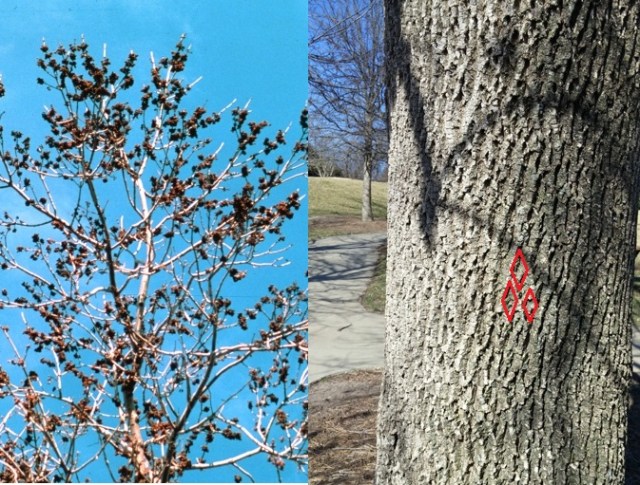
 sebastian the arborist