We have finally made it to St. Louis!
While my family is getting settled in and as we are closing on our house, I have been out doing Arborist things and looking at trees.
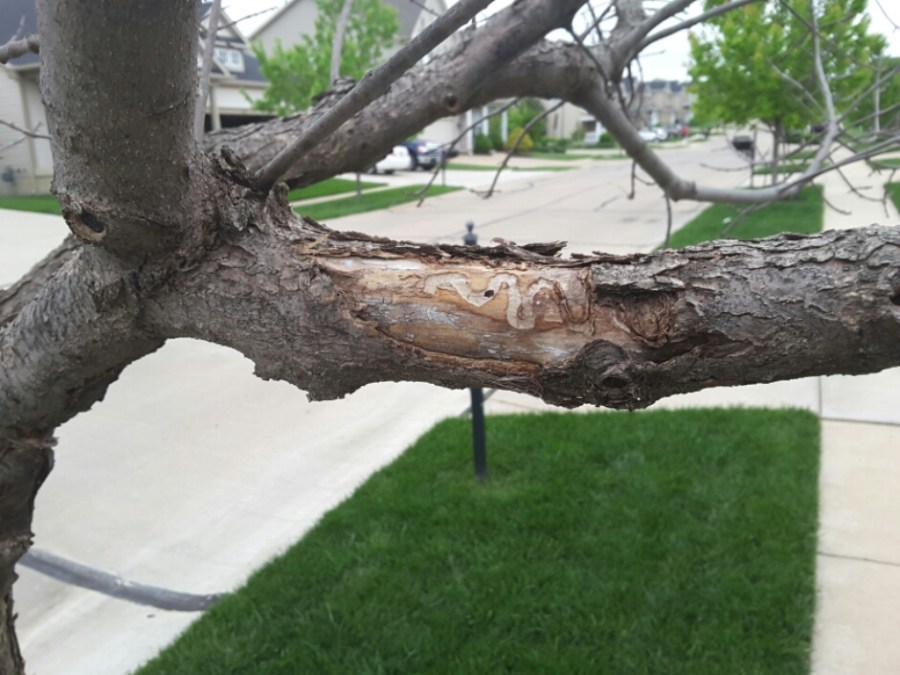
On my first day out in the field, I encountered an entire neighborhood in Lake Saint Louis that has had almost all of their Ash wiped out by Emerald Ash Borer. One tree had a perfect example of the serpentine gallery made by the EAB larvae, right at eye level. I took the picture, above. Every other tree on the block looked identical to this one and we will be taking many of them out this week.
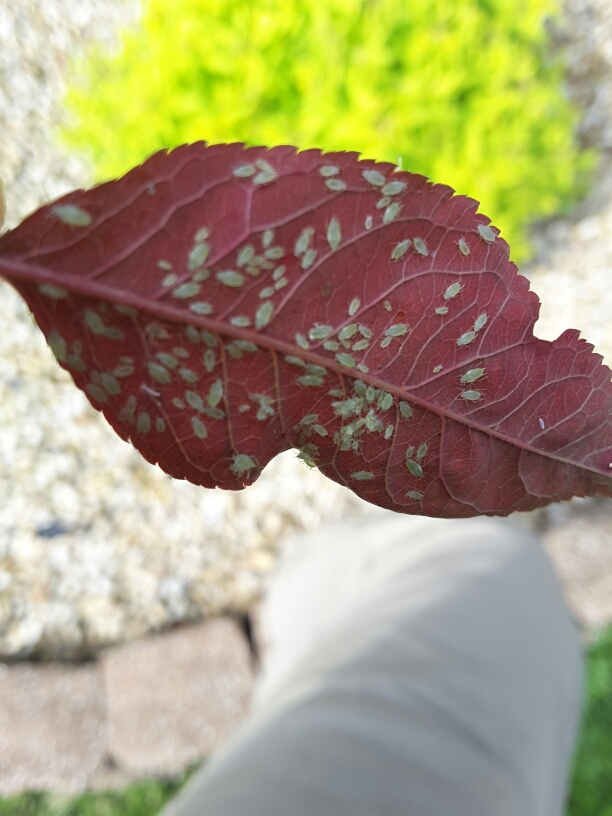
At my very next stop I ran into a couple of other, less harmful pests. The aphids, above, were doing their thing on what I call a purple leafed plum. I learned, today, that they are more commonly referred to as Sand Cherries in this neck of the woods. We sprayed these guys with Tempo and they should be cleared up fairly quickly. It should be noted that aphids are rarely deadly, but this was a pretty severe infestation. For those of you who are a bit more “green” minded, there are some great little mercenaries you can buy to kill the aphids: lady bugs.
The same client had lace bugs on her Azaleas. Again, these probably wouldn’t kill the plant, but can make it unsightly. We all have different tolerances for this. Some like to let nature take its course and allow the plant to recover, some prefer pesticides and others prefer more natural controls. I try to give my clients all of the information they need to make an educated decision that works for them.
Aphids and lace bugs belong in a completely different category than the Emerald Ash Borer. There is no natural control for it. You cannot wait and see. Your tree will not recover, once infested. Your tree will be infested if left untreated.
I would urge everyone to seek guidance, if you have an Ash. Pro Tip: If you prefer not to have your tree treated, get it removed before it dies. This will save you money, as dead trees can make hazardous removals.
A couple of odds and ends:
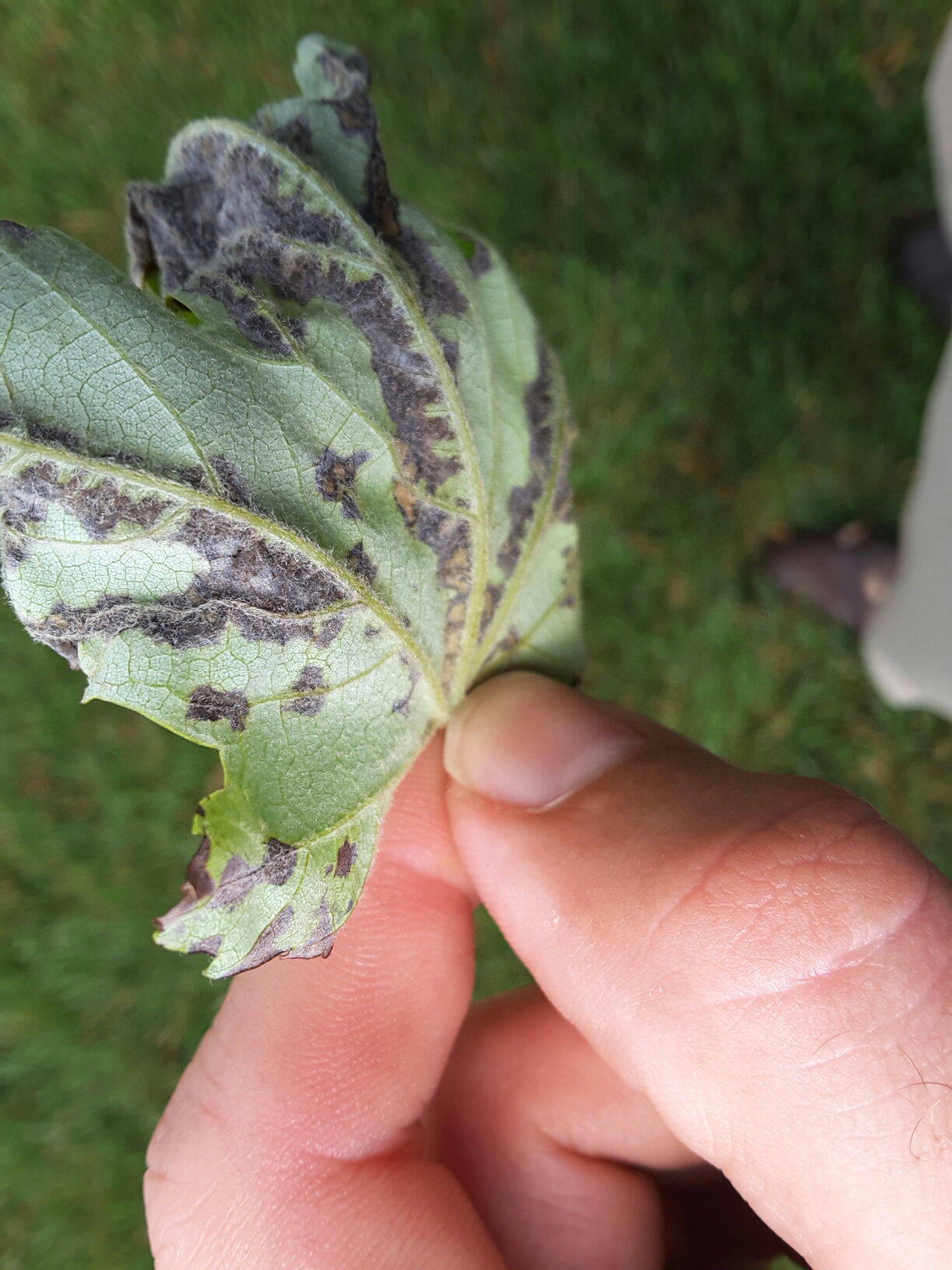
I beleive this to be Anthracnose, a common cool weather fungus. The white fuzzy growth on the bottom of the leaves was a bit of a curve ball. I had not seen that, before.
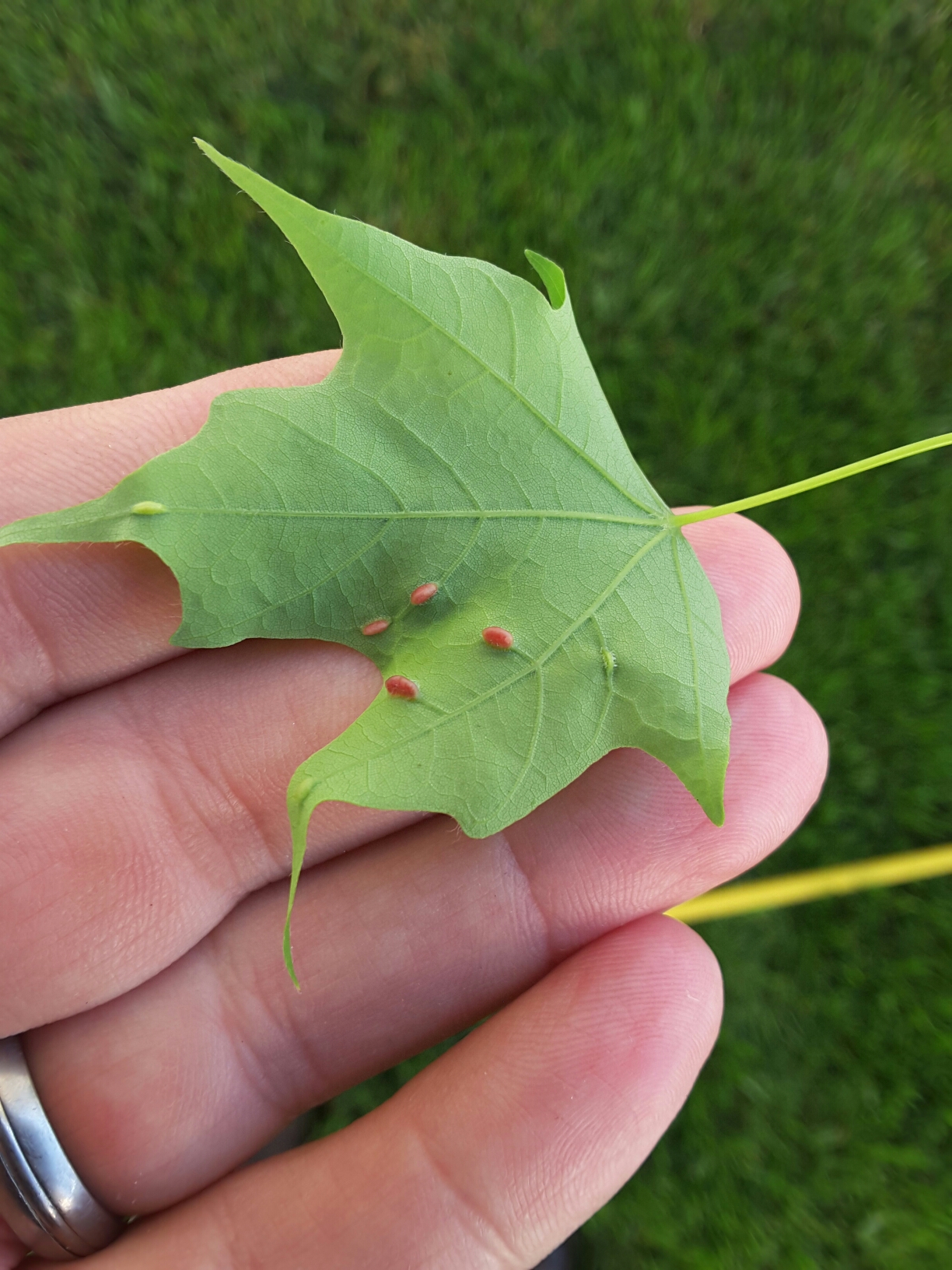
Here we have some sort of gall on a Maple leaf. I still need to identify it, as I haven’t seen something this color. It was only on the one leaf and will not harm the rest of the tree.
I hope everyone is taking the time to get outside and enjoy the weather and the trees. Thank you for checking in!
 sebastian the arborist